
The original essay argued that the euro area entered the years after the global financial crisis with fewer shared stabilisers than the United States. Its central claim was institutional: a common currency had been established without an equally complete fiscal, banking and political union.
The analysis followed earlier warnings that persistent differences in growth, competitiveness and borrowing conditions could strain a monetary union. By 2010, Greece’s sovereign-debt crisis and financial pressure in Ireland, Portugal, Spain and Cyprus had turned those concerns into an urgent policy debate.
European governments created temporary and permanent assistance mechanisms, while the European Central Bank expanded its crisis role. Those steps helped preserve the currency union, but the essay contended that emergency intervention did not remove the underlying design problems.
The nine arguments at a glance
- Political fragmentation
- An ageing population
- Exposure to external shocks
- Lower labour and capital mobility
- Asymmetric adjustment
- Different crisis responses
- Limited fiscal union
- An incomplete banking union
- Questions of political legitimacy
Historical setting
At the start of 2015, the euro area was still dealing with weak growth, high unemployment in several member states and concern about very low inflation. These were period-specific observations, not present-day measurements. The argument compared that setting with the faster institutional response mounted by the United States after the 2008 financial crisis.
- Greece received international assistance and restructured public debt.
- The European Financial Stability Facility supported countries that had lost normal market access.
- The European Stability Mechanism became a permanent crisis fund and supported bank recapitalisation in Spain and Cyprus.
- The European Central Bank made a strong commitment in 2012 to protect the integrity of the euro within its mandate.

1Political fragmentation during economic stress
The essay linked prolonged unemployment and insecurity with growing support for parties that challenged established European policy. In early 2015, political movements in Greece, Spain, France and Italy were gaining attention by opposing austerity, integration or the euro itself.
The comparison with the United States focused less on ordinary political division than on the legitimacy of the union. US states disputed federal policy within a long-established constitutional system, whereas euro-area debates could become arguments about whether authority should remain national or move to European institutions.
2Europe’s ageing population
Demographics formed the second concern. Lower fertility and longer life expectancy implied a shrinking share of working-age residents and rising pressure on pensions, health systems and public finances. The original article viewed immigration as one possible offset, while acknowledging that migration policy was politically contested.
The United States was presented as having a demographic advantage because immigration and a comparatively younger population could support labour-force growth. That contrast was a long-run scenario rather than a prediction based on a single year.
3Greater exposure to external shocks
Geography and institutional coordination formed the third point. Europe sits close to regions affected by conflict, energy disruption and displacement, while also managing the integration of economies with different histories and strategic priorities.
The essay argued that reaching a common response among many governments was inherently slower than action by a single federal state. This did not mean the United States was insulated from global shocks; it meant that executive and fiscal authority was more centralised.

4Labour and capital mobility
Workers in the United States can generally move between states without crossing language, licensing or national-benefit systems. Movement within Europe is legally protected in many circumstances, but language, professional rules, housing markets and differences in social programmes can still make relocation harder.
The same argument was applied to capital. US financial markets operate within one federal legal and regulatory framework. Cross-border investment in the euro area can involve different tax, insolvency and corporate-law systems, even though all participating countries use the same currency.
5Asymmetric economic adjustment
When lending abruptly contracts, debtor economies may have to cut spending, reduce imports and lower wages. Creditor economies do not face an equivalent automatic requirement to increase domestic demand. The original analysis described this imbalance as asymmetric adjustment.
That process can deepen a downturn across the currency area: deficit countries retrench while surplus countries continue to save. A federal budget can partly counter such effects, but the euro area’s central fiscal capacity was small relative to that of the United States.
Terminology note: The source used a disparaging acronym for several southern European economies. This archive review omits that label and refers to countries individually or as debtor and peripheral economies, depending on context.
6Different responses to the Great Recession
Bank recapitalisation
The United States recapitalised financial institutions and introduced broad stress testing relatively early. The essay argued that Europe moved more slowly, allowing weak bank balance sheets and sovereign-debt concerns to reinforce one another.
Monetary policy
The Federal Reserve adopted large-scale asset purchases before the European Central Bank launched a comparable programme. The original argument held that quicker monetary easing reduced the risk of a deeper US contraction, while institutional and political constraints delayed the euro-area response.
Fiscal timing
The United States initially allowed substantial federal deficits and consolidated later. Several euro-area countries tightened budgets during weak economic conditions. Critics argued that simultaneous austerity reduced aggregate demand when private spending was already depressed.
7The euro area was not a full fiscal union
Federal taxes and benefits in the United States automatically transfer resources across states as local economies rise and fall. Unemployment support, progressive taxation and federal spending cushion part of a regional shock without requiring a new interstate agreement each time.
The European Union’s budget was far smaller relative to the economy and did not perform the same stabilising role. Consequently, a decline in one member state’s output translated more directly into reduced local income, unless governments negotiated special assistance.
8An incomplete banking union
The comparison emphasised the US framework of federal supervision, resolution and deposit insurance. Euro-area banking protections remained more closely tied to national governments, creating a risk that concerns about a country’s public finances could weaken confidence in its banks—and vice versa.
A common supervisory mechanism was an important step, but the source argued that risk sharing was incomplete. Creditor countries worried that shared guarantees could become permanent transfers, while crisis-hit countries wanted protection from destabilising bank runs and credit contraction.
9Political union and democratic legitimacy
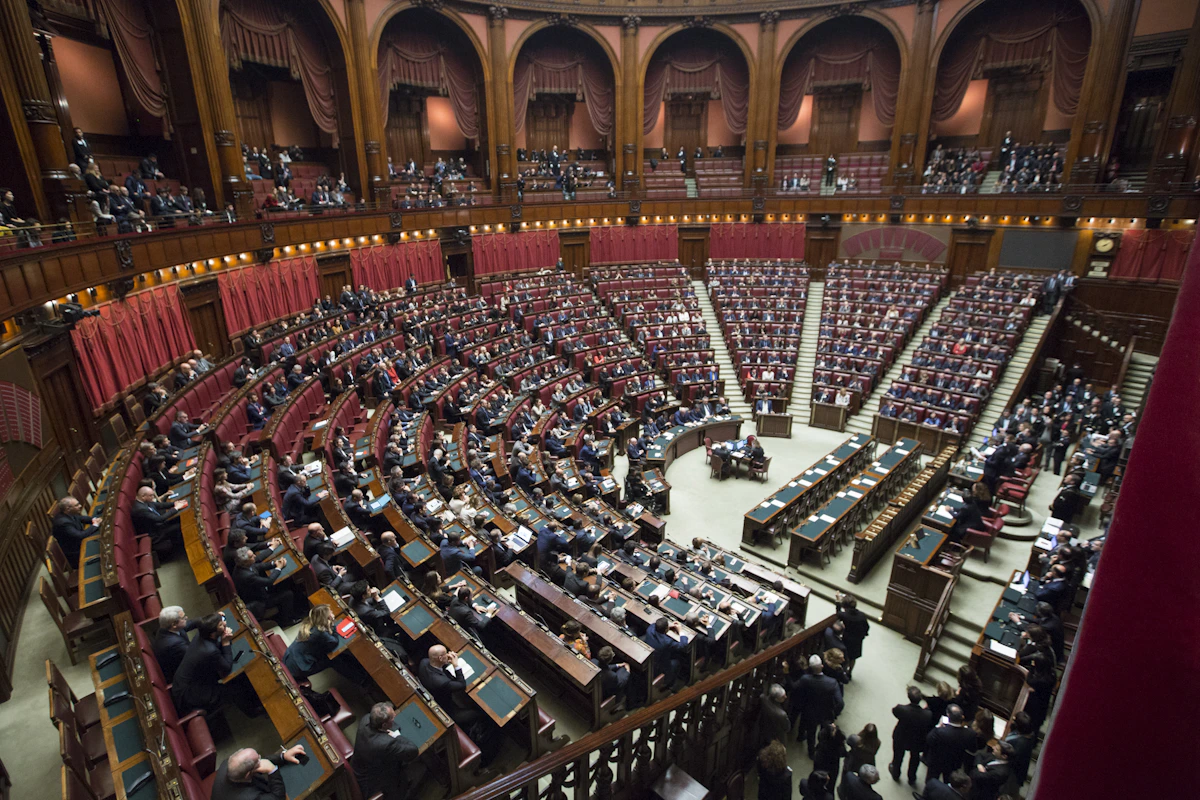
Monetary policy, bank supervision and some budget oversight had shifted toward European institutions. Yet elections, taxation and most public spending remained predominantly national. The essay identified this mismatch as a challenge to democratic consent.
National voters could hold their own governments responsible for decisions heavily constrained by European rules, while European institutions did not always possess the direct political mandate associated with a national government. The concern was that incomplete political union might weaken public support precisely when shared action was most necessary.
The argument in retrospect
The article’s enduring contribution is its focus on shock absorbers. Currency areas are more resilient when workers and capital can move, banks are credibly backstopped, budgets share risk and political institutions can act with public legitimacy.
Its claims should nevertheless be read as a 2015 intervention rather than a current assessment. Institutions evolve, later crises test different mechanisms and economic outcomes do not follow a single predetermined path. Comparisons between the euro area and the United States also need to account for meaningful differences in history, law and political choice.
For present-day analysis, readers should verify current membership, inflation, employment, fiscal arrangements and central-bank policy using recent primary data.